Media
The library your screens play from: images you upload, video files, and links to video hosted at YouTube or Vimeo.
What media is
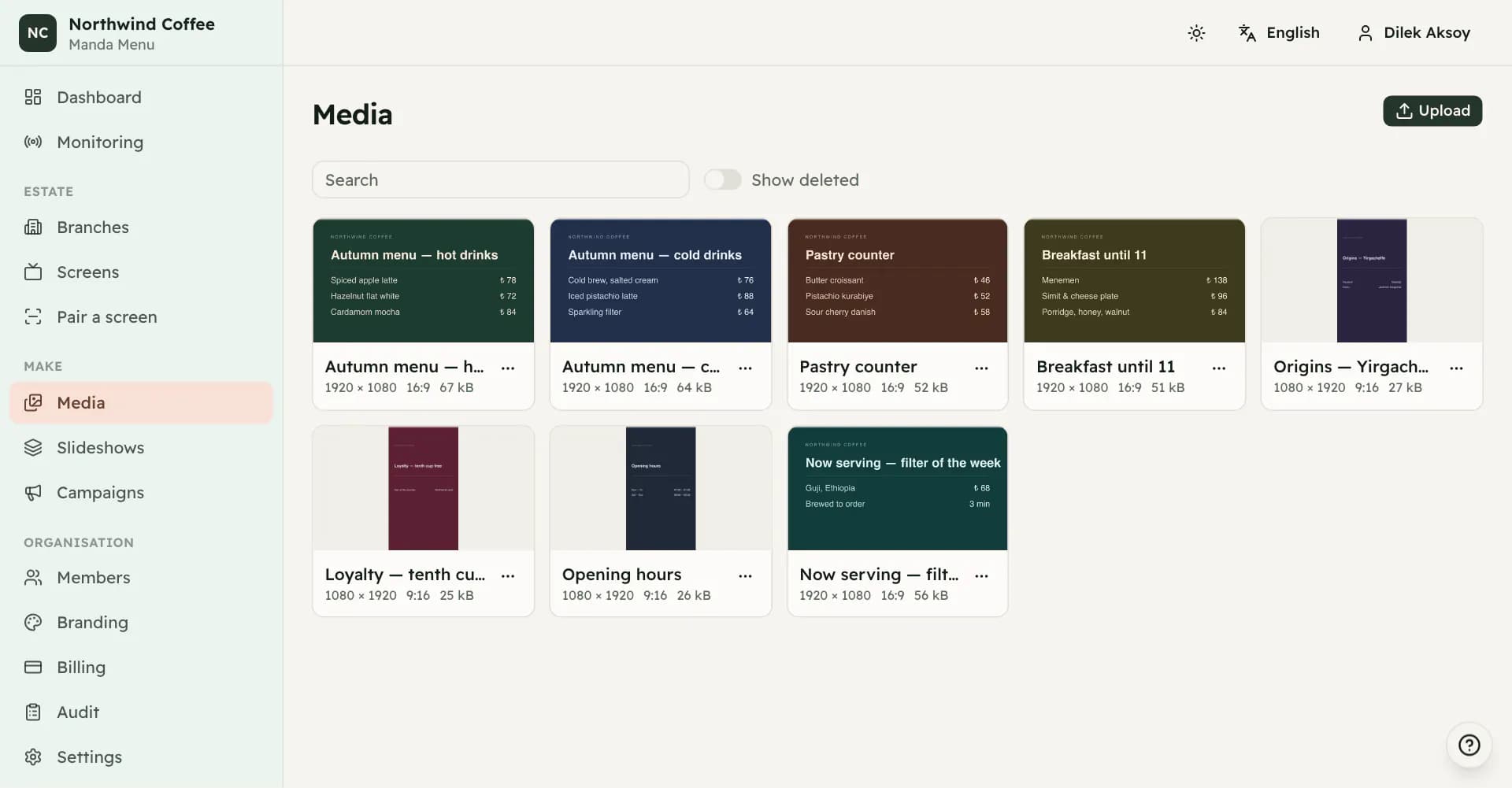
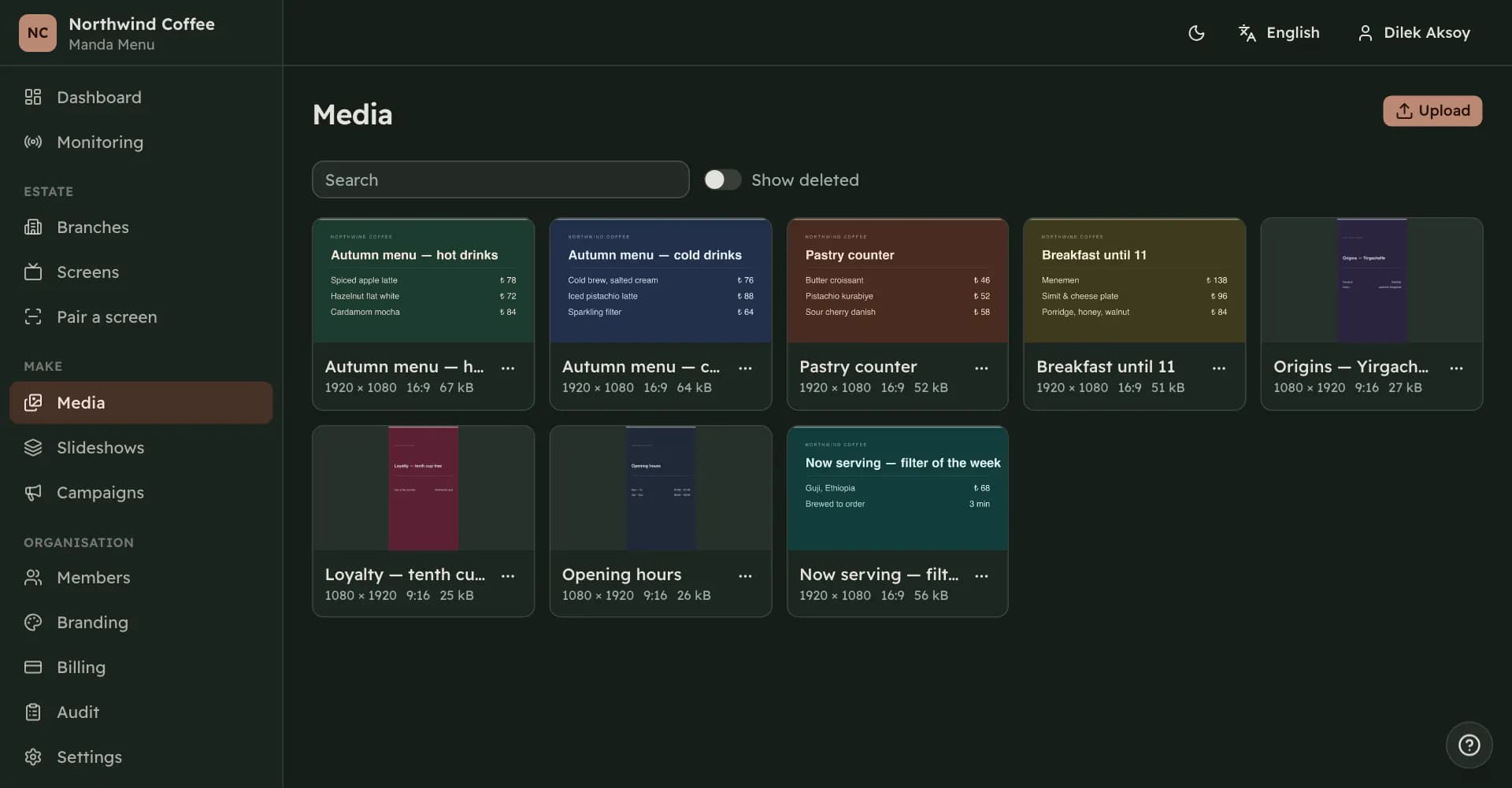
Media is the material your screens show. There are three kinds. An image or a video is a file you upload and this service stores. An embed is a link to a video at YouTube or Vimeo, where nothing is downloaded and the screen plays it from the provider.
Every piece of media keeps its own identity for as long as it exists. Replacing the picture behind it does not create a new item in the library, and everything already pointing at it follows the replacement. That is what makes changing a price on a board a one-file job rather than a hunt through slideshows.
Uploading
Drop files onto the upload dialog or browse for them. Your browser reads each file before anything is sent, so an exact duplicate of something already in your library costs one round trip instead of a full upload. A review step then tells you, per file, whether it is new, an exact duplicate, or worth a second look.
When a file already exists you choose what happens: reuse the existing media, so both places point at the same item, or create an independent copy that can be renamed and replaced without touching the original. The stored bytes are shared either way; what differs is whether you have one item or two.
Two warnings appear without stopping you. An aspect-ratio warning means the image does not match the shape of any screen you have described, so it will be letterboxed or cropped. A large-asset warning means the file is big enough to be slow to reach a branch on a poor line.
After the upload the server reads the bytes back and establishes for itself what the file really is, then produces optimised copies at the sizes your screens need. Optimising happens in the background, so a large batch returns immediately and the copies appear shortly after.
Video and embeds
Video is part of some plans and not others. Where it is not included, neither the upload of a video file nor the embed dialog is offered at all.
Uploaded video plays from your own storage, which means it keeps playing when the branch loses its connection. There is a size ceiling on a single file, set by the people running the platform.
An embed is a link you paste from YouTube or Vimeo. The watch page, the short link, the embed URL and the bare video id are all accepted. Nothing is downloaded and nothing is fetched from the provider when you save it, so an embed costs no storage. You set how long a screen gives it before moving on, because nothing here can ask the provider how long the video runs.
Replacing and version history
Replacing media creates a new version of the same item. Every screen and slideshow that referenced it resolves to the new version once the campaign is published, and the versions before it stay in the history.
Restoring an earlier version publishes it as a new current version rather than rewinding anything, so the history stays a complete record of what was on the wall and when.
You can replace a video with a video and an image with an image. Changing what a thing is means creating a different item, not a new revision of this one. Embeds have no versions; repointing an embed is an edit.
Deleting and restoring
Deleting shows you what the item is used by first, counted in branches, screens and slideshows, so a delete is never a guess. Deletion is reversible for the length of your trash retention window, thirty days unless somebody changed it, after which the files are removed for good.
A deleted item stops reaching screens immediately. Slides that pointed at it survive in the slideshow editor, marked as deleted, and are skipped during playback rather than showing a gap.
You can restore an item everywhere, which puts it back as it was, or restore a copy for one slideshow only, which leaves the original deleted and repoints that one slideshow at a fresh copy.
Limits
Your plan sets how many items the library may hold and how many bytes they may occupy. Both are counted from what is live: deleting something reduces the number straight away rather than waiting for the retention window.
Originals and their optimised copies both count towards storage. Bytes shared between two items are stored once and counted once. Embeds count towards the item limit and not towards storage, because there are no bytes.
An upload that would cross a limit is refused before anything is transferred, with the limit and what you are using both named.